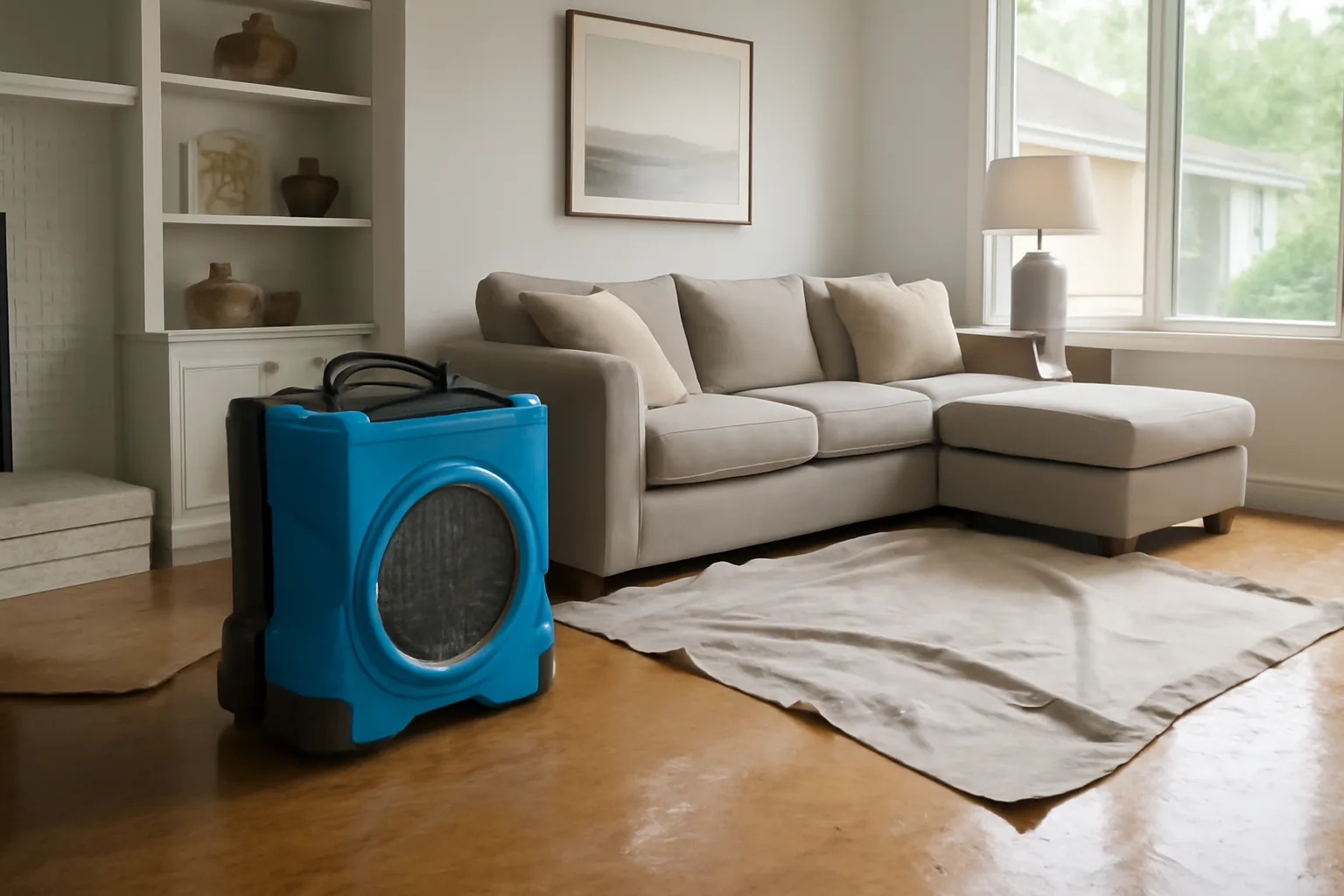
Soot is acidic, and on a Monmouth Beach property it keeps corroding metal, glass, and finishes for as long as it sits uncleaned. Miller Brothers Restoration stabilizes the opening, dries the saturated areas, and maps soot travel through the HVAC and wall cavities in one coordinated push. In area row housing, a fire in one unit can deposit residue two doors down through the connected attic space. Documentation tracks every phase, from stabilization through deodorization, so nothing is left to a verbal account. Ring 551-237-7602 and the cleanup team is already heading your way.
Why A Small Fire Is Not A Small Loss
A fire leaves two problems running at once: what the flames burned and what the hoses soaked. Heat carries smoke up through balloon-frame cavities and shared chases, depositing residue floors away from where it started.
Our technicians deodorize the ductwork and air handler too, since a fire-affected HVAC redistributes the smell long after surfaces are clean. We photograph each surface before and after cleaning so the soot work is shown, not merely claimed.
What Proper Odor Work Looks Like
Owners who report the smell returning usually had ducts that were never properly cleaned. Containment keeps residue from spreading during cleaning, and HEPA filtration captures the airborne soot the work releases.
We do not upsell a duct replacement the system does not need, and we do not skip one it does. Done right, the odor is gone and stays gone — no returning smell once the masking would have faded.
The Suppression-Water Problem — Worth Knowing
A fire leaves two problems running at once: what the flames burned and what the hoses soaked while putting them out. The longer the water sits, the more of the building crosses from cleanable to removable, exactly as in any water loss.
We stabilize the opening, extract the suppression water, and dry the framing on metered readings before it can colonize. We carry the water side through to verified-dry, so the rebuild sits on sound, dry framing instead of a hidden problem.
Putting out a house fire takes a great deal of water, and all of it ends up in the structure as a second loss. That is why our fire response opens with stabilization and extraction, not just soot and odor — the water cannot wait. We stabilize the opening, extract the suppression water, and dry the framing on metered readings before it can colonize. Wet soot smears and etches the longer it sits, so the moisture has to come out before it sets the residue permanently.
Why We Treat Residue Immediately — No Fluff
The residue a fire leaves does not just look bad — it chemically attacks surfaces every day it is left in place. Surfaces that could have been wiped clean on day one often need refinishing or replacement by the end of the week.
We move fast on soot precisely because the residue is corrosive, treating it before it etches anything permanently. The sooner the residue is treated, the more of the home is cleaned rather than refinished or replaced.
Soot is acidic, and it keeps corroding metal, glass, grout, and finishes for as long as it sits uncleaned. The sooner the residue is treated, the more of the home is cleaned rather than refinished or replaced. Our crew matches the cleaning method to each material and treats the residue before it has time to set. The etching is cumulative, so the response window decides how much of the home survives the smoke.
How We Sort Salvage From Loss — A Straight Answer
The belongings in a fire-damaged home need as much careful handling as the structure around them. The pack-out gets fragile and salvageable contents out of the work zone so they are not damaged further during restoration.
Photographs of every packed-out item back the contents portion of the scope, leaving no gaps for the carrier to question. A documented pack-out is what keeps the contents claim from becoming an afterthought the carrier underpays.
What is inside the home — furniture, clothing, keepsakes — is part of the loss and part of the recovery. A documented pack-out is what keeps the contents claim from becoming an afterthought the carrier underpays. The contents inventory becomes part of the claim file, so the belongings are supported as fully as the structure. We sort the contents into salvage and loss, clean the salvage in a controlled environment, and record the rest for the claim.
Water Damage Restoration and the rest of your recovery
A property emergency in {city} usually crosses more than one line — fire damage restoration often overlaps with burst pipe response, wind damage repair, mold inspection and removal, sewage cleanup, reconstruction, and it all stays with one accountable crew. The same crew dispatches to and everywhere else across area.
If you searched for local emergency restoration, When the time comes, a crew that owns the whole job picks up, and we take it from there. Call 551-237-7602 any hour, read Extraction, Drying, and Verifying Dry in Monmouth Beach on our blog, or head back to our Monmouth Beach home page to see everything we do.